

How Small Businesses Can Compete with Big Brands Using Design
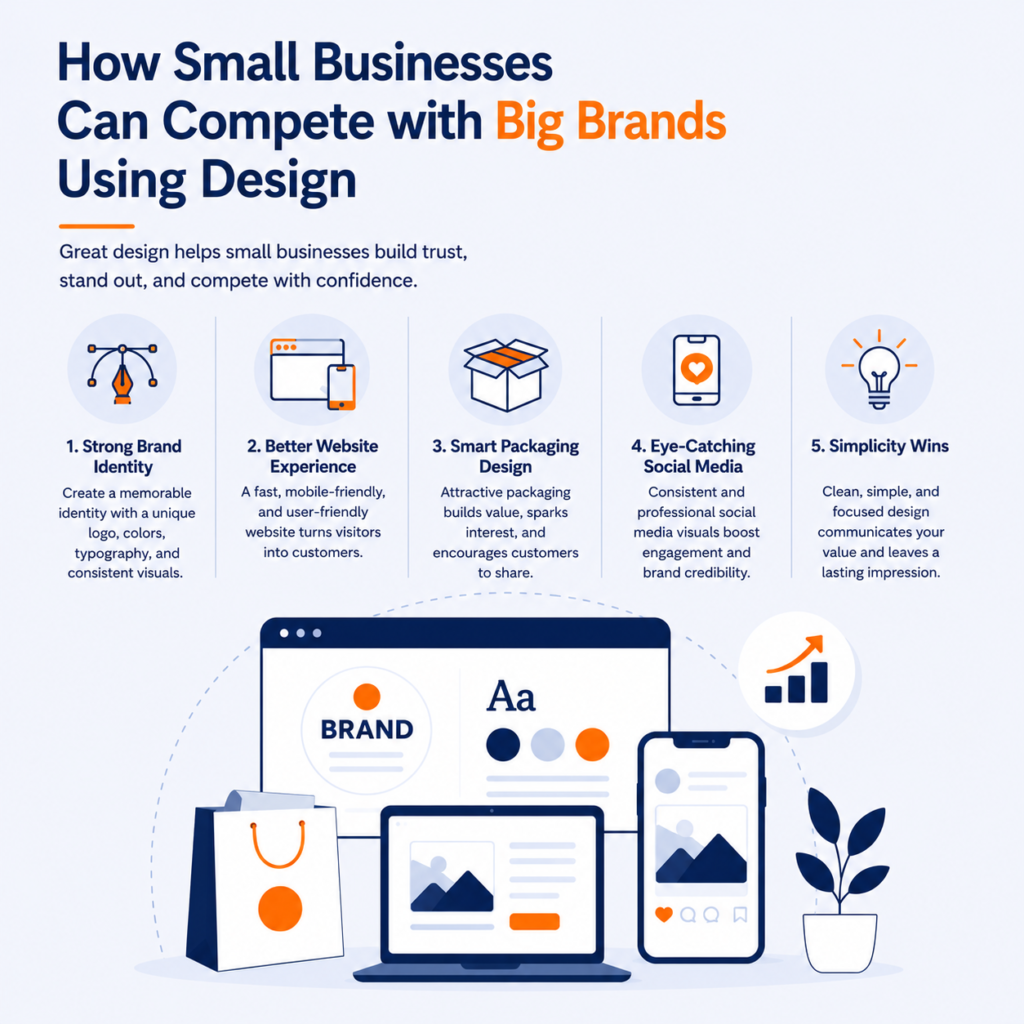
Small businesses often believe they cannot compete with larger companies due to limited budgets. However, design has become one of the most powerful competitive tools in modern business. In 2026, customers judge brands quickly based on visuals, user experience, and online presence. Strong branding and professional design can help small businesses compete with even the biggest brands. Why Design Matters in Business Design is more than aesthetics. It influences: Businesses with strong design appear more professional and credible. 1. Build a Strong Brand Identity A memorable brand identity helps businesses stand out. Key branding elements include: Consistent branding improves customer recognition and trust. 2. Focus on Website User Experience A poorly designed website can reduce customer confidence instantly. Businesses should prioritize: Good user experience improves engagement and conversions. 3. Use Packaging as a Marketing Tool Packaging design has become a major branding strategy. Visually attractive packaging can: Modern consumers often share aesthetically pleasing products online, giving businesses free exposure. 4. Prioritize Social Media Design Social media is often the first impression customers have of a business. Professional content design improves: Consistent visuals help businesses appear larger and more established. 5. Simplicity Creates Stronger Branding Many businesses overcomplicate design. Simple, clean, and strategic visuals often perform better. Minimalist branding improves: Strong design communicates value instantly. Conclusion Small businesses no longer need massive budgets to compete with large brands. Strategic branding and customer-focused design can create powerful market presence. In 2026, design is not just decoration — it is a business growth strategy. Businesses that invest in branding, user experience, and visual consistency can attract more customers and build stronger trust.
Creative Advertising: What Makes Campaigns Go Viral
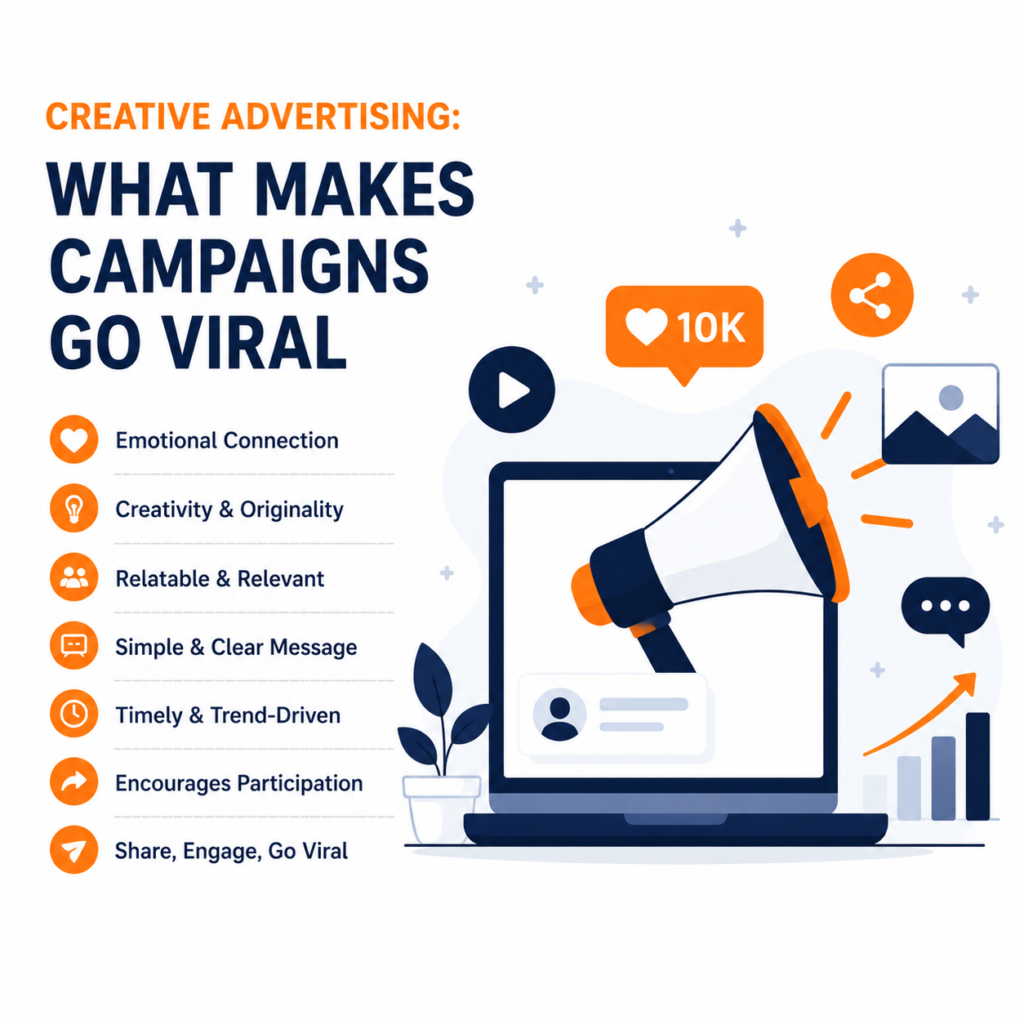
In today’s digital landscape, advertising is everywhere. From social media feeds and search engines to streaming platforms and websites, consumers are constantly exposed to promotional content. However, only a small percentage of campaigns truly capture attention and go viral. Viral advertising is not just about luck—it is a combination of creativity, strategy, timing, and understanding human behavior. Campaigns that go viral have the power to reach millions, generate massive engagement, and create lasting brand impact. But what exactly makes an advertising campaign go viral? Understanding Virality Virality occurs when content is rapidly shared by a large number of people. Unlike traditional advertising, which relies heavily on paid promotion, viral campaigns grow organically through shares, likes, comments, and word-of-mouth. At its core, virality is driven by one key factor: people want to share content that resonates with them. This could be because it is entertaining, emotional, relatable, or surprising. The Role of Emotion Emotion is one of the most powerful drivers of viral content. Campaigns that evoke strong emotions are more likely to be shared. Common emotions that drive virality include: For example, a funny ad can make people laugh and share it with friends, while an emotional story can create a deeper connection and encourage sharing. The stronger the emotional response, the higher the chances of virality. Creativity and Originality In a crowded digital space, creativity is what makes a campaign stand out. Unique and original ideas capture attention and spark interest. Creative advertising often involves: Audiences are more likely to engage with content that feels fresh and different. Repetitive or generic ads, on the other hand, are easily ignored. Relatability and Cultural Relevance Content that reflects real-life situations or cultural trends tends to perform well. When people see something they can relate to, they are more likely to engage and share. This includes: However, it is important for brands to approach cultural topics carefully and authentically. Misalignment can lead to negative reactions. The Power of Simplicity Viral campaigns are often simple and easy to understand. Complex messages can confuse the audience and reduce engagement. A clear and straightforward idea ensures that: Simplicity makes it easier for audiences to connect with the campaign. Timing and Trends Timing plays a crucial role in virality. Launching a campaign at the right moment can significantly increase its reach. For example: Brands that act quickly and stay relevant have a higher chance of creating viral content. Platform Optimization Different platforms have different content formats and audience behaviors. A campaign that works on one platform may not perform the same on another. For example: Optimizing content for each platform increases its chances of success. Encouraging User Participation Many viral campaigns involve audience participation. When users are encouraged to create, share, or interact with content, it increases engagement and reach. Examples include: Participation makes the audience feel involved and turns them into active promoters of the campaign. The Role of Influencers Influencers play a significant role in amplifying campaigns. Their reach and credibility can help content spread quickly. Collaborating with the right influencers ensures that the campaign reaches the target audience effectively. Micro-influencers, in particular, often have highly engaged communities. Balancing Creativity with Strategy While creativity is essential, it must be supported by a solid strategy. A viral campaign should align with the brand’s goals and message. Key considerations include: A campaign that goes viral but does not connect to the brand may generate attention but not meaningful results. Measuring Success To understand the impact of a viral campaign, businesses need to track performance metrics such as: These insights help evaluate the effectiveness of the campaign and guide future strategies. Conclusion Viral advertising is a powerful tool that can elevate a brand’s visibility and impact. While there is no guaranteed formula for virality, certain elements consistently contribute to success—emotion, creativity, relatability, simplicity, and timing. The most successful campaigns are those that connect with people on a human level while staying true to the brand’s identity. In the end, going viral is not just about reaching a large audience—it is about creating meaningful and memorable experiences that people want to share.
How Startups Can Build a Digital Presence from Scratch
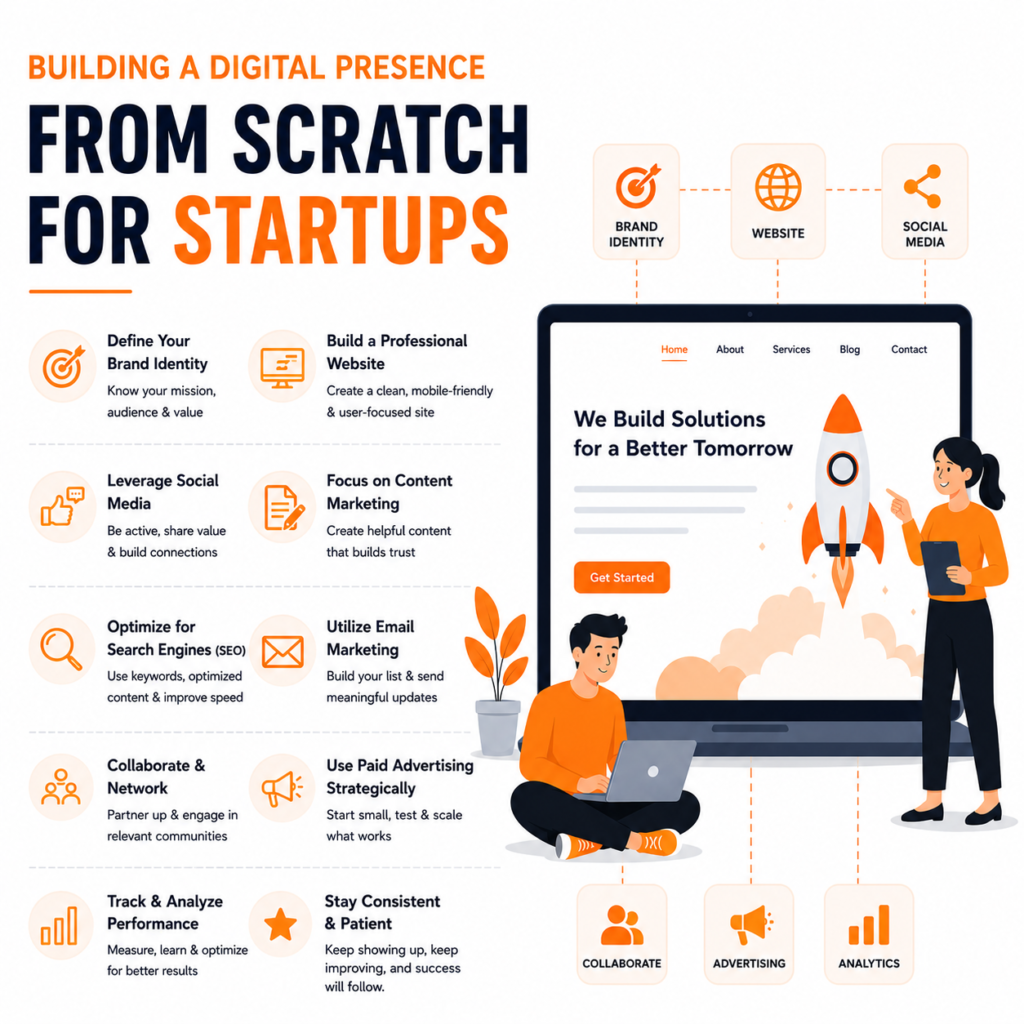
In today’s digital-driven world, having a strong online presence is no longer optional for startups—it is essential. Whether you are launching a tech product, a service-based business, or an e-commerce brand, your digital presence determines how people discover, perceive, and engage with your business. For startups, the challenge is even greater. With limited budgets, resources, and brand recognition, building a digital presence from scratch can feel overwhelming. However, with the right strategy and consistent effort, startups can establish a strong foundation and grow effectively. Start with a Clear Brand Identity Before going online, startups must define their brand identity. This includes understanding what the business stands for, who it serves, and how it wants to be perceived. Key elements to define: A clear brand identity ensures consistency across all digital platforms and helps the startup stand out in a crowded market. Build a Professional Website A website is the foundation of a digital presence. It acts as the central hub where customers can learn about the business, explore offerings, and take action. A startup website should: Even a simple website can create a strong first impression if it is well-designed and user-friendly. Leverage Social Media Platforms Social media is one of the most powerful tools for startups to gain visibility. Platforms like Instagram, LinkedIn, and Twitter allow businesses to connect directly with their audience. Startups should: Social media is not just about promotion—it is about building relationships and creating a community. Focus on Content Marketing Content marketing is a cost-effective way for startups to attract and engage their audience. By creating valuable content, startups can establish authority and build trust. Types of content include: The goal is to provide value rather than just promote products. Over time, this approach helps build credibility and attracts organic traffic. Optimize for Search Engines (SEO) Search engine optimization (SEO) helps startups become discoverable online. By optimizing content with relevant keywords and improving website performance, startups can rank higher in search results. Basic SEO practices include: SEO takes time, but it provides long-term benefits by driving organic traffic. Utilize Email Marketing Email marketing is one of the most effective ways to nurture leads and maintain customer relationships. Startups can use email to share updates, promotions, and valuable content. Building an email list early is important. Offering incentives such as free resources or discounts can encourage users to subscribe. Consistent and meaningful communication helps keep the brand top of mind. Collaborate and Network Collaboration is a powerful way for startups to expand their reach. Partnering with influencers, other businesses, or industry experts can introduce the brand to new audiences. Networking also helps build credibility and opens up opportunities for growth. Startups should actively engage in online communities and industry discussions. Use Paid Advertising Strategically While organic growth is important, paid advertising can help startups gain initial traction. Platforms like Google Ads and social media ads allow businesses to target specific audiences. Startups should: Strategic use of paid ads can accelerate growth and increase visibility. Track and Analyze Performance Building a digital presence is an ongoing process that requires continuous improvement. Startups should track key metrics such as: Analyzing data helps identify what works and what needs improvement. This allows startups to refine their strategies and achieve better results. Stay Consistent and Patient One of the biggest challenges for startups is maintaining consistency. Building a digital presence does not happen overnight—it requires time, effort, and persistence. Startups should focus on: Patience is key. Consistent effort leads to gradual growth and long-term success. Conclusion Building a digital presence from scratch may seem challenging, but it is one of the most important steps for startup success. By focusing on brand identity, creating valuable content, leveraging social media, and optimizing for search engines, startups can establish a strong online foundation. The key is to start small, stay consistent, and adapt over time. In the digital world, visibility leads to opportunity—and for startups, that opportunity can make all the difference.
Website Design Trends That Boost User Experience

In today’s digital-first world, a website is often the first interaction a customer has with a brand. It acts as a digital storefront, a communication platform, and a conversion tool—all in one. Because of this, website design plays a critical role in shaping user experience and influencing business success. As user expectations continue to evolve, businesses must stay updated with the latest website design trends. A well-designed website is not just about aesthetics—it is about functionality, usability, and delivering a seamless experience. In 2026, the focus is on creating websites that are fast, intuitive, and user-centric. The Importance of User Experience (UX) User experience, or UX, refers to how users interact with and feel about a website. A positive experience keeps users engaged, while a poor experience drives them away. Factors that influence UX include: A website that is easy to use and visually appealing encourages users to stay longer, explore more, and take action. Minimalist and Clean Design One of the most prominent trends in modern web design is minimalism. Clean layouts with fewer elements help reduce distractions and improve focus. Minimalist design emphasizes: By removing unnecessary elements, businesses can create a more organized and visually appealing interface. This makes it easier for users to find information quickly. Mobile-First Design With the majority of users accessing websites through mobile devices, mobile-first design has become essential. This approach focuses on designing for smaller screens first and then scaling up for larger devices. Mobile-first design ensures: A mobile-friendly website is no longer optional—it is a necessity for reaching a wider audience. Fast Loading Speed Speed is a critical factor in user experience. Users expect websites to load quickly, and even a slight delay can lead to higher bounce rates. To improve loading speed, businesses can: A fast website not only improves user satisfaction but also boosts search engine rankings. Interactive and Engaging Elements Modern websites are becoming more interactive to keep users engaged. Elements such as animations, hover effects, and micro-interactions add a dynamic feel to the website. These features: However, it is important to use them wisely. Too many animations can slow down the site and create distractions. Personalization and Smart Content Personalization is a growing trend in website design. By using data and AI, websites can deliver customized experiences based on user behavior. For example: Personalized experiences make users feel valued and increase engagement. Strong Visual Hierarchy A well-structured visual hierarchy helps guide users through the website. It ensures that important information stands out and is easy to find. Designers achieve this through: A clear hierarchy improves readability and makes navigation more intuitive. Dark Mode and Modern Aesthetics Dark mode has become a popular design trend. It not only looks modern but also reduces eye strain, especially in low-light environments. Many websites now offer both light and dark modes, allowing users to choose their preferred viewing experience. Modern aesthetics also include: These elements create a visually appealing and contemporary look. Accessibility and Inclusive Design Accessibility is becoming a key focus in website design. Businesses are recognizing the importance of making websites usable for everyone, including people with disabilities. Accessible design includes: Inclusive design not only improves user experience but also expands the reach of the website. Seamless Navigation Navigation is one of the most important aspects of a website. Users should be able to find what they are looking for quickly and easily. Effective navigation includes: A well-organized navigation system reduces frustration and keeps users engaged. Integration of AI and Chatbots AI-powered chatbots and virtual assistants are becoming common on websites. They provide instant support, answer queries, and guide users through the website. These tools: They are especially useful for businesses that want to provide 24/7 support. Conclusion Website design is constantly evolving, and staying updated with the latest trends is essential for delivering a great user experience. From minimalist layouts and mobile-first design to personalization and AI integration, modern websites focus on usability and engagement. A well-designed website not only attracts visitors but also converts them into customers. By prioritizing user experience, businesses can create websites that are not only visually appealing but also highly effective. In 2026, the key to successful web design lies in understanding user needs and creating experiences that are simple, fast, and meaningful.
The Power of Storytelling in Marketing
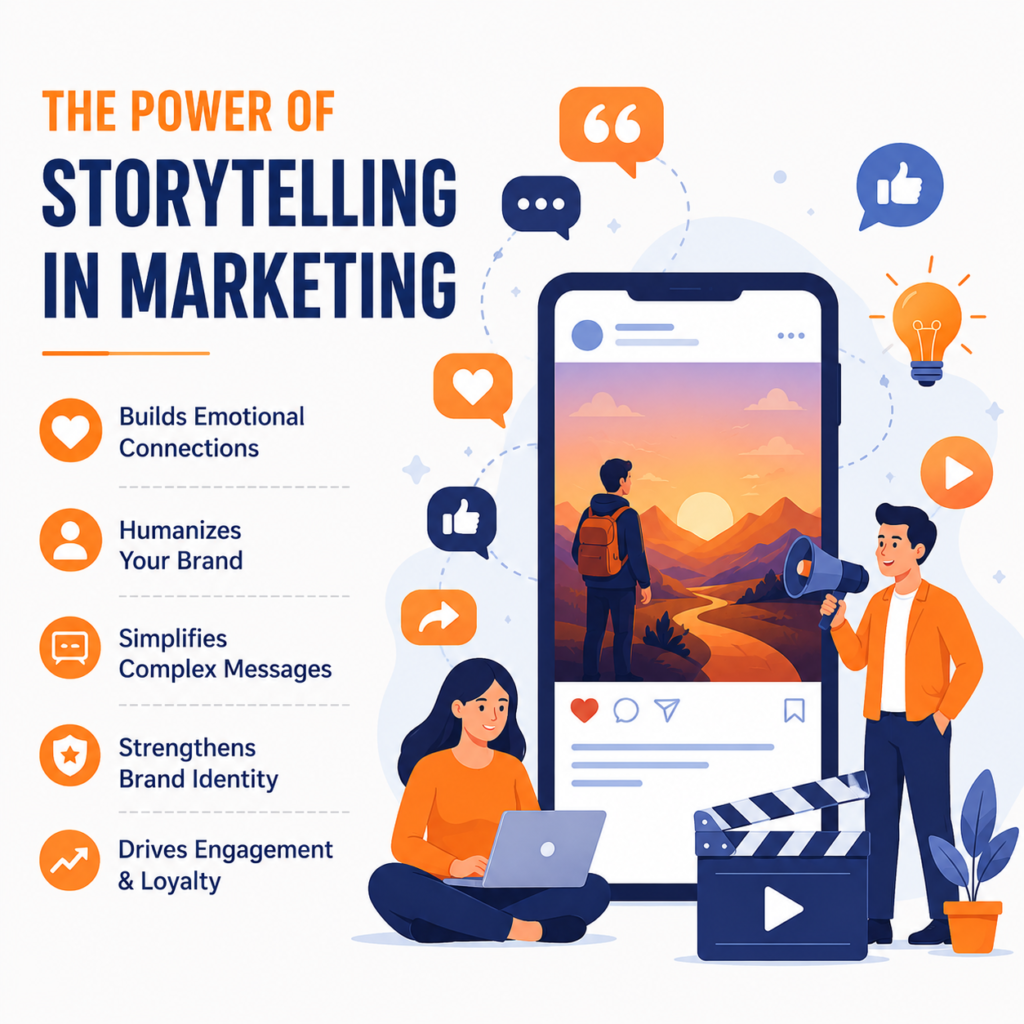
In a world filled with advertisements, promotions, and constant digital noise, capturing attention has become increasingly difficult. Consumers are exposed to thousands of messages every day, and most of them are quickly forgotten. What truly stands out is not just what a brand sells, but the story it tells. Storytelling has become one of the most powerful tools in modern marketing. It transforms brands from mere businesses into relatable, human experiences. Instead of simply promoting products or services, storytelling allows brands to connect with their audience on a deeper emotional level. Why Stories Matter Humans are naturally drawn to stories. From ancient times to modern media, storytelling has been a fundamental way of sharing knowledge, emotions, and experiences. Stories are easier to remember than facts because they engage both logic and emotion. When a brand tells a story, it creates a narrative that people can relate to. Instead of presenting dry information, it presents a journey—something that audiences can follow and connect with. This is why storytelling is so effective in marketing. It turns information into experience. Creating Emotional Connections One of the biggest advantages of storytelling is its ability to create emotional connections. People may forget product features or pricing details, but they remember how a brand made them feel. A powerful story can evoke emotions such as: When customers feel emotionally connected to a brand, they are more likely to engage, trust, and remain loyal. This emotional bond is what differentiates strong brands from the rest. Making Brands More Human Storytelling helps humanize brands. Instead of appearing as a faceless entity, a brand becomes something people can relate to. For example, sharing the journey of how a business started, the challenges it faced, and the values it stands for makes the brand more authentic. Customers are more likely to support brands that feel genuine and transparent. This human connection builds trust, which is essential for long-term success. Simplifying Complex Messages Marketing often involves explaining complex ideas, products, or services. Storytelling makes this easier by presenting information in a simple and engaging way. Instead of listing features, a brand can show how its product solves a real problem through a story. This makes the message more relatable and easier to understand. For example, instead of saying “our software improves efficiency,” a brand can tell a story about how a customer saved time and achieved better results using the product. Building Brand Identity Stories play a key role in shaping brand identity. They communicate what the brand stands for, its values, and its purpose. Consistent storytelling across different platforms helps reinforce this identity. Whether it’s through social media, advertisements, or website content, the story should remain aligned with the brand’s core message. Over time, this creates a strong and recognizable brand image. Types of Stories in Marketing There are different types of stories that brands can use to connect with their audience: 1. Brand Story The origin and journey of the business, including its mission and values. 2. Customer Stories Real experiences and testimonials from customers. 3. Behind-the-Scenes Stories Insights into how products are made or how the team works. 4. Problem-Solution Stories Narratives that highlight a problem and show how the brand provides a solution. 5. Vision Stories Stories about the future goals and impact the brand wants to create. Using a mix of these stories keeps content fresh and engaging. Storytelling Across Platforms In today’s digital landscape, storytelling is not limited to one format. Brands can tell stories through: Each platform offers a unique way to present stories. For example, short-form videos can capture quick emotional moments, while blogs can provide deeper narratives. The key is to adapt the story to the platform while maintaining consistency. Authenticity is Key While storytelling is powerful, it must be authentic. Audiences can easily recognize when a story feels forced or unrealistic. Authentic storytelling is: Brands should focus on real experiences and genuine messages rather than trying to create overly dramatic or artificial stories. The Role of Visual Storytelling Visual elements play a crucial role in storytelling. Images, videos, and design enhance the narrative and make it more engaging. A strong visual story can capture attention instantly and communicate emotions without words. Combining visuals with written or spoken storytelling creates a more impactful experience. Measuring the Impact of Storytelling Like any marketing strategy, storytelling should be measured to understand its effectiveness. Businesses can track: These metrics help identify which stories resonate most with the audience. Conclusion Storytelling is more than just a marketing technique—it is a powerful way to connect, engage, and inspire. In a crowded digital world, stories help brands stand out and be remembered. By creating emotional connections, simplifying messages, and building authenticity, storytelling transforms how brands communicate with their audience. In the end, people may forget what a brand said, but they will remember the story it told. And that story can be the difference between being noticed and being truly remembered.
From Idea to Execution: Building a Strong Brand Identity

Every successful business starts with an idea. But an idea alone is not enough to stand out in today’s competitive market. What truly sets a business apart is how that idea is transformed into a strong and recognizable brand identity. Brand identity is more than just a logo or a color palette. It is the complete experience a business creates for its audience. It reflects the company’s values, personality, and promise. From the first interaction to long-term engagement, brand identity shapes how customers perceive and connect with a business. Building a strong brand identity requires a clear vision, strategic thinking, and consistent execution. It is a process that turns abstract ideas into a tangible and memorable presence. Defining the Core of Your Brand The foundation of any strong brand identity lies in its core elements. Before designing visuals or creating content, businesses need to define who they are and what they stand for. This includes: These elements act as a guide for all branding decisions. Without a clear foundation, the brand may appear inconsistent or unclear. Understanding Your Audience A brand is not built in isolation—it is built for an audience. Understanding the needs, preferences, and behaviors of your target audience is essential. When businesses know their audience, they can create messaging and visuals that resonate. This involves researching: A strong brand identity speaks directly to its audience, making them feel understood and valued. Crafting a Unique Brand Personality Just like people, brands have personalities. Some are bold and energetic, while others are calm and professional. Defining your brand personality helps create a consistent tone across all communication. For example: This personality influences how the brand speaks, designs visuals, and interacts with its audience. Designing Visual Elements Visual identity is one of the most recognizable aspects of branding. It includes elements such as: These elements should reflect the brand’s personality and values. For instance, a bold color palette may convey energy, while minimal design may reflect simplicity and elegance. Consistency in visual design is crucial. When all elements align, the brand becomes easily recognizable and memorable. Creating a Consistent Brand Voice Brand voice is how a business communicates with its audience. It includes the tone, language, and style used in content. A consistent brand voice helps build familiarity and trust. Whether it’s a website, social media post, or email, the brand should sound the same across all platforms. For example: Consistency ensures that the audience always knows what to expect. Turning Strategy into Execution Having a strong strategy is important, but execution is what brings the brand to life. This involves applying the brand identity across all touchpoints. Key areas of execution include: Every interaction with the brand should reflect its identity. This creates a seamless and cohesive experience for the audience. The Importance of Consistency Consistency is one of the most critical factors in building a strong brand identity. When a brand maintains a consistent look, tone, and message, it becomes more recognizable and trustworthy. Inconsistent branding can confuse customers and weaken the brand’s impact. For example, using different colors, fonts, or messaging styles across platforms can make the brand appear unprofessional. A clear brand guideline helps maintain consistency and ensures that everyone involved follows the same standards. Building Emotional Connections A strong brand identity goes beyond visuals and messaging—it creates emotional connections. People are more likely to engage with brands that make them feel something. This can be achieved through: When customers feel connected to a brand, they are more likely to trust it, support it, and remain loyal. Adapting and Evolving While consistency is important, brands also need to evolve. Market trends, customer preferences, and business goals change over time. A strong brand identity is flexible enough to adapt while staying true to its core values. This ensures that the brand remains relevant without losing its identity. Regularly reviewing and updating branding elements helps keep the brand fresh and aligned with its audience. Measuring Brand Impact Building a brand is an ongoing process, and it is important to measure its effectiveness. Businesses can track: These insights help identify strengths and areas for improvement. Conclusion Building a strong brand identity is a journey that starts with an idea and evolves through strategic execution. It requires clarity, consistency, and creativity. From defining core values to designing visuals and maintaining a consistent voice, every step plays a role in shaping how the brand is perceived. In a competitive market, a strong brand identity is not just an advantage—it is a necessity. It helps businesses stand out, build trust, and create lasting connections with their audience.
Social Media Trends Businesses Can’t Ignore
Social media is no longer just a platform for communication—it has become a powerful tool for marketing, branding, and business growth. Over the years, it has evolved from simple text-based interactions to highly dynamic, visual, and interactive experiences. As we move further into 2026, the pace of change continues to accelerate, making it essential for businesses to stay updated with the latest trends. Ignoring social media trends is no longer an option. Brands that fail to adapt risk losing visibility, engagement, and relevance. On the other hand, businesses that embrace these trends can build stronger connections with their audience and stand out in a crowded digital space. The Rise of Short-Form Video Content Short-form video content has become one of the most dominant trends on social media. Platforms like Instagram Reels, YouTube Shorts, and TikTok have changed how users consume content. People now prefer quick, engaging videos that deliver value in just a few seconds. These videos are highly effective because they capture attention quickly and are easy to consume. Businesses can use short-form videos to showcase products, share tips, tell stories, or highlight behind-the-scenes moments. The key to success is authenticity and creativity. Highly polished content is no longer necessary—what matters is being relatable and engaging. Authenticity Over Perfection Today’s audiences value authenticity more than perfection. Users are more likely to connect with content that feels real and genuine rather than overly produced or scripted. Brands that show their human side—through behind-the-scenes content, real stories, and honest communication—build stronger trust. This shift has led to the rise of “unfiltered” content that feels more personal and relatable. In 2026, businesses that prioritize authenticity will have a significant advantage in building meaningful relationships with their audience. The Growth of Influencer and Creator Collaborations Influencer marketing continues to grow, but it is evolving. Instead of focusing only on big influencers, brands are now collaborating with micro and nano influencers who have smaller but highly engaged audiences. These creators often have stronger connections with their followers, making their recommendations more impactful. Collaborating with the right influencers allows brands to reach targeted audiences in a more organic way. Additionally, user-generated content is becoming increasingly important. Encouraging customers to share their experiences helps build credibility and community. Social Commerce is Expanding Social media platforms are becoming shopping destinations. Features like in-app purchases, product tags, and live shopping events are making it easier for users to buy products directly from social media. This trend is known as social commerce, and it is growing rapidly. Businesses can now create a seamless journey from discovery to purchase without users leaving the platform. For brands, this means integrating marketing and sales strategies more closely. A strong social media presence can directly drive revenue. The Importance of Community Building Social media is shifting from broadcasting content to building communities. Instead of just gaining followers, businesses are focusing on creating engaged and loyal communities. This involves interacting with users, responding to comments, starting conversations, and creating content that encourages participation. Features like polls, Q&A sessions, and live streams help foster engagement. A strong community not only supports the brand but also acts as a powerful word-of-mouth marketing channel. AI-Driven Content and Automation Artificial intelligence is playing a major role in social media marketing. From content creation to scheduling and analytics, AI tools are helping businesses work more efficiently. AI can analyze user behavior, predict trends, and suggest the best times to post. It also helps in creating personalized content that resonates with different audience segments. While AI improves efficiency, it is important to maintain a human touch to keep content authentic and engaging. The Shift Toward Value-Driven Content Users are becoming more selective about the content they consume. They are looking for content that provides value—whether it is educational, entertaining, or inspiring. Brands that focus only on promotion are losing attention. Instead, successful businesses are creating content that solves problems, shares insights, or adds value to the audience’s life. This approach not only increases engagement but also builds trust and authority. Ephemeral Content and Real-Time Engagement Temporary content, such as Instagram Stories and Snapchat posts, continues to be popular. This type of content creates a sense of urgency and encourages users to engage quickly. Ephemeral content is ideal for sharing updates, announcements, and behind-the-scenes moments. It allows brands to stay active and relevant without overloading their main feed. Real-time engagement, such as live videos and instant responses, also plays a key role in building stronger connections. Data-Driven Decision Making Social media platforms provide a wealth of data that businesses can use to improve their strategies. Metrics such as engagement rates, reach, and conversions help identify what works and what doesn’t. In 2026, data-driven decision-making is essential. Businesses that analyze their performance and adapt their strategies accordingly will achieve better results. It is not just about creating content—it is about creating content that performs. Conclusion Social media continues to evolve, and businesses must evolve with it. From short-form videos and authentic content to social commerce and community building, the trends shaping 2026 are all about connection, value, and engagement. The brands that succeed will be those that stay flexible, experiment with new formats, and focus on building genuine relationships with their audience. In a world where attention is limited, staying relevant on social media is not just about following trends—it’s about understanding them and using them strategically.
The Psychology Behind High-Converting Designs
Design is often seen as a visual element—something that makes a website, advertisement, or brand look attractive. But in reality, great design goes far beyond aesthetics. It is deeply rooted in psychology. Every color, shape, font, and layout decision influences how users think, feel, and act. High-converting designs are not created by chance. They are carefully crafted using psychological principles that guide user behavior. Businesses that understand these principles can create designs that not only look good but also drive real results. Understanding User Behavior At the core of design psychology is human behavior. When users interact with a website or a visual, they make decisions within seconds. These decisions are often subconscious and influenced by how the design makes them feel. For example, a cluttered layout can overwhelm users and cause them to leave, while a clean and organized design creates a sense of ease and trust. Understanding how users process information helps designers create experiences that feel natural and intuitive. The goal is simple: make it easy for users to understand, navigate, and take action. The Power of First Impressions First impressions matter more than ever in the digital world. When a user visits a website or sees an ad, they form an opinion within a few seconds. This initial reaction determines whether they stay or leave. A strong first impression is created through: If a design fails to capture attention immediately, users are unlikely to engage further. High-converting designs prioritize clarity and impact right from the start. Color Psychology Colors play a powerful role in influencing emotions and decisions. Different colors evoke different feelings, and understanding this can significantly improve design effectiveness. For example: Choosing the right color palette helps reinforce the brand message and guide user actions. For instance, a bright and contrasting color for a call-to-action button can increase clicks. However, it is important to maintain balance. Too many colors can create confusion, while a well-chosen palette creates harmony and focus. Typography and Readability Typography is another critical element of design psychology. The way text is presented affects how easily it can be read and understood. Clear and readable fonts improve user experience, while overly decorative or complex fonts can create frustration. Font size, spacing, and hierarchy also play a role in guiding the user’s attention. For example: Good typography ensures that users can quickly scan content and find what they are looking for. Visual Hierarchy Visual hierarchy is the arrangement of elements in a way that guides the viewer’s eye. It helps users understand what is most important and where to focus their attention. Designers use size, color, contrast, and spacing to create hierarchy. For instance, a large headline at the top of a page immediately draws attention, while smaller text provides supporting information. A clear visual hierarchy makes navigation easier and improves user engagement. Without it, users may feel lost or confused. The Role of White Space White space, also known as negative space, is the empty area between design elements. While it may seem like unused space, it plays a crucial role in improving readability and focus. White space: High-converting designs use white space effectively to guide users and create a comfortable viewing experience. Emotional Connection Design is not just about functionality—it’s about emotion. People are more likely to engage with designs that make them feel something. Images, colors, and layouts can evoke emotions such as trust, excitement, curiosity, or comfort. For example, a warm and friendly design can make a brand feel approachable, while a sleek and minimal design can convey professionalism. Creating an emotional connection helps build trust and encourages users to take action. Call-to-Action (CTA) Optimization A call-to-action (CTA) is one of the most important elements in any design. It tells users what to do next, whether it’s signing up, making a purchase, or contacting the business. Effective CTAs are: For example, a button that stands out with contrasting color and simple text like “Get Started” or “Learn More” is more likely to be clicked. The placement of the CTA also matters. It should be easily visible and positioned where users naturally look. Trust and Credibility Trust is a key factor in conversion. Users are more likely to take action if they feel confident in the brand. Design elements that build trust include: A poorly designed website can create doubt, while a polished and professional design builds credibility. Simplicity is Key One of the most important principles of high-converting design is simplicity. Overcomplicated designs can confuse users and reduce engagement. A simple design focuses on: By removing unnecessary elements, designers can create a more focused and effective user experience. Conclusion High-converting design is not just about making things look good—it’s about understanding how people think and behave. By applying psychological principles, businesses can create designs that guide users, build trust, and drive action. From color choices and typography to layout and emotional connection, every detail plays a role in influencing user decisions. The most successful designs are those that combine creativity with strategy, resulting in experiences that are both visually appealing and highly effective. In the end, great design is not just seen—it is felt. And when users feel the right emotions, they are far more likely to convert.
Why Every Business Needs a Content Strategy in 2026

In today’s fast-paced digital world, content is no longer optional—it is essential. Every brand, whether a startup or an established company, is competing for attention online. Social media feeds are crowded, search engines are saturated, and audiences are more selective than ever. In such an environment, simply posting content is not enough. What businesses truly need in 2026 is a well-defined and strategic approach to content. A content strategy is more than just planning what to post. It is about understanding your audience, setting clear goals, creating valuable content, and delivering it consistently across the right platforms. Without a strategy, businesses often waste time, effort, and resources on content that fails to deliver results. The Shift from Random Posting to Strategic Content Many businesses still operate without a proper content plan. They post occasionally, follow trends blindly, or create content only when they have time. While this approach may generate short-term visibility, it rarely leads to long-term growth. In 2026, successful brands are those that treat content as a core business function. They plan their content in advance, align it with their business goals, and measure its performance regularly. Instead of asking, “What should we post today?” they ask, “What value are we providing to our audience this month?” This shift from random posting to strategic content is what separates growing brands from stagnant ones. Building Trust Through Consistency Consistency is one of the most important elements of a successful content strategy. When a brand shows up regularly with valuable and relevant content, it builds trust with its audience. People begin to recognize the brand, understand its voice, and rely on it for information or inspiration. On the other hand, inconsistent posting creates confusion and weakens brand identity. If a business posts frequently for a few weeks and then disappears, it loses momentum and audience interest. A content strategy ensures that content is planned, scheduled, and delivered consistently. This not only improves visibility but also strengthens credibility over time. Understanding Your Audience One of the biggest advantages of having a content strategy is gaining a deeper understanding of your audience. Instead of creating generic content, businesses can focus on what their audience actually needs and wants. This involves identifying key factors such as: By understanding these elements, businesses can create content that is more relevant and engaging. When content speaks directly to the audience’s needs, it naturally performs better and builds stronger connections. Content as a Long-Term Asset Unlike traditional advertising, which delivers results only while it is running, content continues to provide value over time. A well-written blog post, an informative video, or a helpful guide can attract traffic and generate leads for months or even years. In 2026, businesses are increasingly viewing content as a long-term asset rather than a short-term tactic. Each piece of content contributes to the brand’s online presence and authority. For example, blog articles improve search engine rankings, social media posts increase engagement, and educational content builds trust. Together, they create a strong digital ecosystem that supports business growth. Improved SEO and Online Visibility Search engines play a crucial role in how customers discover businesses. A strong content strategy helps improve search engine optimization (SEO), making it easier for potential customers to find your brand online. By consistently publishing high-quality, keyword-rich content, businesses can rank higher in search results. This leads to increased organic traffic, which is often more valuable than paid traffic because it comes from users actively searching for information. In 2026, SEO is no longer just about keywords—it is about delivering meaningful, user-focused content. Search engines prioritize content that provides real value, and a well-planned strategy ensures that your content meets these standards. Better Resource Management Creating content without a plan often leads to inefficiency. Teams may spend time brainstorming last-minute ideas, duplicating efforts, or producing content that does not align with business goals. A content strategy helps streamline the entire process. It allows teams to: This not only saves time but also improves the quality of the content being produced. Adapting to Changing Trends Digital trends change rapidly, and businesses need to stay updated to remain relevant. A content strategy makes it easier to adapt to these changes without losing direction. For instance, if short-form videos become more popular, businesses with a strategy can quickly incorporate them into their plan. If a new platform gains traction, they can test and integrate it effectively. Instead of reacting randomly to trends, a strategic approach allows businesses to adapt thoughtfully and maintain consistency. Measuring Performance and Improving Results One of the key benefits of a content strategy is the ability to measure performance. Businesses can track metrics such as: These insights help identify what is working and what needs improvement. Over time, this leads to better decision-making and more effective content. Without a strategy, it becomes difficult to measure success or understand the impact of content efforts. Standing Out in a Competitive Market In 2026, competition is higher than ever. Almost every business is creating content, which makes it harder to stand out. A strong content strategy helps brands differentiate themselves by focusing on their unique voice, perspective, and value. Instead of copying competitors, businesses can create original and meaningful content that reflects their identity. This not only attracts attention but also builds a loyal audience. Conclusion A content strategy is no longer a luxury—it is a necessity. In a world where attention is limited and competition is intense, businesses need a clear and structured approach to content. By planning ahead, understanding the audience, maintaining consistency, and measuring performance, businesses can turn content into a powerful tool for growth. In 2026, the brands that succeed will not be the ones that create the most content, but the ones that create the most meaningful and strategic content.
The Future of Branding in the AI Era
Branding has always been about creating a unique identity that resonates with people. From iconic logos to memorable taglines, businesses have long relied on creativity and consistency to build recognition and trust. However, the landscape of branding is undergoing a major transformation. With the rise of artificial intelligence (AI), the way brands are created, communicated, and experienced is changing rapidly. Today, branding is no longer limited to visual elements or static messaging. It has become dynamic, data-driven, and deeply personalized. Businesses that understand and embrace this shift are gaining a competitive edge, while those that resist it risk falling behind. The Shift from Traditional to Intelligent Branding In the past, branding decisions were largely based on intuition, market research, and creative instincts. While these elements are still important, AI has introduced a new layer of intelligence. Brands can now analyze vast amounts of data in real time to understand customer behavior, preferences, and trends. This means businesses no longer have to guess what their audience wants—they can know it. AI tools can track how users interact with content, what they click on, how long they stay, and even what emotions they respond to. This level of insight allows brands to refine their messaging continuously and deliver content that truly resonates. Personalization at Scale One of the most powerful impacts of AI on branding is the ability to personalize experiences at scale. Earlier, personalization was limited and often manual. Now, AI enables brands to deliver customized content to thousands—or even millions—of users simultaneously. For example, a brand can show different website content, email campaigns, or advertisements based on a user’s behavior, interests, and past interactions. This creates a more relevant and engaging experience for each individual. When customers feel understood, they are more likely to trust the brand and stay loyal. Personalization is no longer a luxury—it has become an expectation. Faster Content Creation and Execution AI tools have significantly reduced the time and effort required to create content. From blog posts and social media captions to ad copy and product descriptions, AI can generate high-quality drafts within seconds. This allows creative teams to focus more on strategy and innovation rather than repetitive tasks. Instead of spending hours writing from scratch, they can refine, optimize, and add a human touch to AI-generated content. As a result, brands can produce more content, experiment with different ideas, and respond quickly to trends. Speed has become a critical factor in staying relevant, and AI makes it possible. Consistency Across Channels Maintaining consistency is one of the biggest challenges in branding, especially when a business operates across multiple platforms. AI helps ensure that the brand voice, tone, and messaging remain consistent everywhere—from websites and social media to emails and advertisements. By using AI-driven tools, businesses can create guidelines and automate content generation in a way that aligns with their brand identity. This consistency builds trust and makes the brand more recognizable over time. Data-Driven Creativity One common concern is that AI might replace creativity. In reality, it enhances it. AI provides insights that help creatives make better decisions. Instead of guessing what might work, they can rely on data to guide their ideas. For example, AI can analyze which headlines perform better, which visuals attract more attention, and which messages lead to conversions. This allows designers and marketers to combine creativity with strategy, resulting in more effective campaigns. Creativity is no longer just about originality—it’s about impact. And AI helps measure and improve that impact. The Human Element Still Matters Despite all the advancements in AI, one thing remains clear: branding is ultimately about human connection. People connect with emotions, stories, and authenticity—things that AI alone cannot fully replicate. The most successful brands in the AI era are not those that rely entirely on automation, but those that use AI as a tool to enhance human creativity. They use data to understand their audience, but they rely on human insight to tell meaningful stories. Empathy, cultural understanding, and emotional intelligence are still essential components of strong branding. AI can support these elements, but it cannot replace them. Challenges and Considerations While AI offers numerous benefits, it also comes with challenges. Over-reliance on automation can make content feel generic or impersonal. There is also the risk of losing originality if brands depend too heavily on AI-generated ideas. Additionally, data privacy is a growing concern. Customers are becoming more aware of how their data is used, and brands must ensure transparency and ethical practices. To succeed, businesses need to strike a balance—using AI responsibly while maintaining their unique voice and identity. The Future of Branding Looking ahead, branding will become even more interactive and immersive. Technologies like AI, augmented reality (AR), and virtual reality (VR) will create new ways for customers to experience brands. Imagine personalized shopping experiences, AI-powered brand assistants, and content that adapts in real time based on user behavior. The possibilities are endless. However, the core principle of branding will remain the same: building trust and creating meaningful connections. Conclusion The future of branding lies at the intersection of technology and creativity. AI is transforming how brands operate, making them more efficient, data-driven, and personalized. But at its core, branding is still about people. Businesses that embrace AI while staying true to their values and authenticity will stand out in the crowded digital landscape. The key is not to replace human creativity, but to amplify it. In the AI era, the brands that succeed will be those that combine the power of technology with the art of storytelling—creating experiences that are not only smart but also deeply human.
