
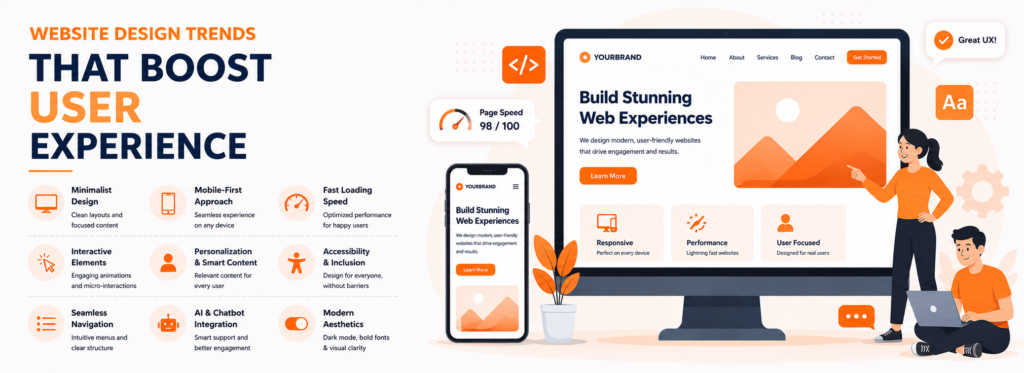
In today’s digital-first world, a website is often the first interaction a customer has with a brand. It acts as a digital storefront, a communication platform, and a conversion tool—all in one. Because of this, website design plays a critical role in shaping user experience and influencing business success.
As user expectations continue to evolve, businesses must stay updated with the latest website design trends. A well-designed website is not just about aesthetics—it is about functionality, usability, and delivering a seamless experience. In 2026, the focus is on creating websites that are fast, intuitive, and user-centric.
The Importance of User Experience (UX)
User experience, or UX, refers to how users interact with and feel about a website. A positive experience keeps users engaged, while a poor experience drives them away.
Factors that influence UX include:
- Ease of navigation
- Page load speed
- Mobile responsiveness
- Visual clarity
- Accessibility
A website that is easy to use and visually appealing encourages users to stay longer, explore more, and take action.
Minimalist and Clean Design
One of the most prominent trends in modern web design is minimalism. Clean layouts with fewer elements help reduce distractions and improve focus.
Minimalist design emphasizes:
- Simple layouts
- Clear typography
- Limited color palettes
- Strategic use of white space
By removing unnecessary elements, businesses can create a more organized and visually appealing interface. This makes it easier for users to find information quickly.
Mobile-First Design
With the majority of users accessing websites through mobile devices, mobile-first design has become essential. This approach focuses on designing for smaller screens first and then scaling up for larger devices.
Mobile-first design ensures:
- Faster loading times
- Better navigation on small screens
- Improved usability
A mobile-friendly website is no longer optional—it is a necessity for reaching a wider audience.
Fast Loading Speed
Speed is a critical factor in user experience. Users expect websites to load quickly, and even a slight delay can lead to higher bounce rates.
To improve loading speed, businesses can:
- Optimize images
- Reduce unnecessary scripts
- Use efficient coding practices
A fast website not only improves user satisfaction but also boosts search engine rankings.
Interactive and Engaging Elements
Modern websites are becoming more interactive to keep users engaged. Elements such as animations, hover effects, and micro-interactions add a dynamic feel to the website.
These features:
- Capture attention
- Provide feedback to user actions
- Enhance overall experience
However, it is important to use them wisely. Too many animations can slow down the site and create distractions.
Personalization and Smart Content
Personalization is a growing trend in website design. By using data and AI, websites can deliver customized experiences based on user behavior.
For example:
- Showing relevant products or services
- Displaying personalized recommendations
- Adapting content based on location or preferences
Personalized experiences make users feel valued and increase engagement.
Strong Visual Hierarchy
A well-structured visual hierarchy helps guide users through the website. It ensures that important information stands out and is easy to find.
Designers achieve this through:
- Font size and weight
- Color contrast
- Spacing and layout
A clear hierarchy improves readability and makes navigation more intuitive.
Dark Mode and Modern Aesthetics
Dark mode has become a popular design trend. It not only looks modern but also reduces eye strain, especially in low-light environments.
Many websites now offer both light and dark modes, allowing users to choose their preferred viewing experience.
Modern aesthetics also include:
- Bold typography
- Subtle gradients
- Clean icons and illustrations
These elements create a visually appealing and contemporary look.
Accessibility and Inclusive Design
Accessibility is becoming a key focus in website design. Businesses are recognizing the importance of making websites usable for everyone, including people with disabilities.
Accessible design includes:
- Readable fonts and proper contrast
- Keyboard navigation
- Alt text for images
- Screen reader compatibility
Inclusive design not only improves user experience but also expands the reach of the website.
Seamless Navigation
Navigation is one of the most important aspects of a website. Users should be able to find what they are looking for quickly and easily.
Effective navigation includes:
- Clear menus
- Logical structure
- Search functionality
A well-organized navigation system reduces frustration and keeps users engaged.
Integration of AI and Chatbots
AI-powered chatbots and virtual assistants are becoming common on websites. They provide instant support, answer queries, and guide users through the website.
These tools:
- Improve customer service
- Increase engagement
- Enhance user experience
They are especially useful for businesses that want to provide 24/7 support.
Conclusion
Website design is constantly evolving, and staying updated with the latest trends is essential for delivering a great user experience. From minimalist layouts and mobile-first design to personalization and AI integration, modern websites focus on usability and engagement.
A well-designed website not only attracts visitors but also converts them into customers. By prioritizing user experience, businesses can create websites that are not only visually appealing but also highly effective.
In 2026, the key to successful web design lies in understanding user needs and creating experiences that are simple, fast, and meaningful.
