

Introduction
Think about the last time a product caught your attention simply because of the way it looked.
Maybe it was the color of the box, the typography, the shape of the bottle, or a small detail that made the product feel different from everything around it. That is the power of good packaging design.
Packaging is no longer just about protecting a product. For modern brands, it is an important part of the overall customer experience. It communicates personality, creates recognition, sets expectations, and can even influence whether someone decides to buy a product.
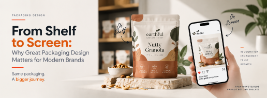
And today, packaging has to do more than stand out on a retail shelf. It also needs to look good in an Instagram post, an online store, a product review, or an unboxing video.
In other words, packaging has moved from shelf to screen.
Packaging Is Often the First Conversation Between a Brand and a Customer
Before customers try a product, they see it.
The packaging is often their first physical interaction with a brand. Within seconds, it can communicate whether the product is premium, affordable, playful, natural, modern, traditional, or innovative.
This is why effective product packaging design starts with understanding the brand and its audience.
A luxury skincare product, for example, may benefit from clean layouts, subtle colors, and refined finishes. A children’s snack brand might take a completely different approach with bright colors, playful illustrations, and expressive typography.
There is no single formula for great packaging. The right design is the one that communicates the right message to the right audience.
Good Packaging Makes a Brand Recognizable
Think about some of the world’s most recognizable products. Often, you can identify them before reading the brand name.
That recognition doesn’t happen by accident.
Consistent packaging helps create a visual language for a brand. Colors, typography, illustrations, patterns, shapes, and materials can all become recognizable brand assets.
When these elements are used consistently across products, customers begin to associate them with the brand.
This is where packaging branding becomes particularly valuable. Instead of treating every product package as a separate design project, successful brands create a packaging system that feels connected while still allowing individual products to have their own identity.
Packaging Can Influence Buying Decisions
Customers don’t always choose products based purely on features or price.
Visual presentation can play a role too.
When a package is well organized and communicates its key benefits clearly, customers can understand the product more quickly. A strong design can also create a perception of quality and make a product feel more relevant to its target audience.
This doesn’t mean attractive packaging can replace a good product. It can’t.
Instead, effective packaging works alongside the product itself. It gets attention, communicates value, and encourages the customer to take a closer look.
Standing Out on a Crowded Shelf
Retail shelves are competitive.
Products are surrounded by alternatives that may offer similar features, prices, and benefits. If packaging blends into its surroundings, customers may never notice it.
Creative packaging design can help solve this problem.
Strong contrast, distinctive typography, an interesting package structure, or a unique visual concept can help a product attract attention.
But standing out does not mean making a package unnecessarily complicated.
Sometimes, the simplest design can be the most noticeable. What matters is having a clear idea behind the design and using visual elements intentionally.
The Digital World Has Changed Packaging
A product package used to be seen primarily in stores.
Today, it can travel much further.
Customers photograph products for social media. Influencers create unboxing videos. Online shoppers browse product images before making a purchase. Customers share reviews that include photos of the packaging.
As a result, packaging has become part of a brand’s digital presence.
A package that looks impressive in person but confusing in a photograph may lose some of its impact online. Modern packaging needs to work across both physical and digital environments.
This is one of the biggest shifts in modern packaging design.
The Unboxing Experience Matters
E-commerce has made the unboxing experience an important part of branding.
When a customer orders a product online, the package may be their first physical experience with the company.
That moment creates an opportunity for brands to surprise and delight customers.
Thoughtful details such as custom inserts, branded tissue paper, thank-you notes, reusable boxes, or carefully designed opening experiences can make an ordinary delivery feel more memorable.
And when customers enjoy that experience, they may share it with others.
A simple unboxing video can put a brand in front of thousands of potential customers. Suddenly, packaging is not just part of the delivery—it becomes part of the marketing.
Sustainable Packaging Is Becoming More Important
Packaging also has an environmental responsibility.
As consumers become more conscious of waste and material choices, brands are paying greater attention to how much packaging they use and what materials they choose.
Sustainable packaging can involve:
- Recyclable materials
- Recycled materials
- Reusable packaging
- Reduced packaging
- Paper-based alternatives
- Efficient structural designs
However, sustainability should be approached thoughtfully. Using less material is useful only when the packaging still protects the product and provides a good customer experience.
The best sustainable packaging solutions balance function, appearance, cost, and environmental considerations.
Packaging Should Tell a Story
Every strong brand has something it wants customers to remember.
Packaging provides a physical space to communicate that story.
The choice of colors, imagery, typography, materials, and structure can all contribute to the brand narrative.
A food brand might use illustrations to highlight its heritage. A wellness brand might use natural textures and soft visual elements. A technology company might choose a clean, minimal approach to communicate simplicity and innovation.
The design should answer one important question:
What do we want customers to feel when they see this product?
Once that feeling is clear, design decisions become much easier to make.
Packaging and E-Commerce Need to Work Together
Online shopping has changed the role of packaging.
Customers often discover products through search engines, social media, advertisements, marketplaces, and websites before they ever see the physical package.
This means the packaging shown online should accurately represent the actual product experience.
Consistency matters.
If a product looks premium online but arrives in packaging that feels careless, there is a disconnect. On the other hand, when the digital presentation and physical packaging tell the same story, customers get a more consistent experience.
That consistency can strengthen trust and help build long-term brand relationships.
What Makes Packaging Design Effective?
There are several elements that come together to create successful packaging.
Clear Visual Hierarchy
Customers should quickly understand what the product is, who makes it, and why it is worth considering.
Strong Typography
Typography should reflect the personality of the brand while remaining easy to read.
Strategic Use of Color
Colors can help communicate personality and make products easier to recognize, but they should support the brand rather than simply follow design trends.
Memorable Visuals
Photography, illustrations, patterns, and graphic elements can make packaging more distinctive and emotionally engaging.
Functional Design
Beautiful packaging still needs to work. It should protect the product, be practical to handle, and suit the way the product is stored, transported, and used.
Brand Consistency
Packaging should feel like part of the same brand family across different products and platforms.
Common Packaging Mistakes Brands Should Avoid
Even a visually attractive package can fail if the strategy behind it isn’t clear.
One common mistake is trying to communicate too much. Too many colors, fonts, graphics, and messages can make packaging difficult to understand.
Another is designing primarily for personal preference instead of the target customer.
Brands should also avoid copying competitors too closely. Packaging needs to fit within its category while still giving customers a reason to remember it.
Finally, brands should think about how packaging will appear online. A design that works on a large retail shelf may need to be adjusted so its key elements remain clear in a small e-commerce image.
From Shelf to Screen: Designing for Every Touchpoint
Modern packaging needs to perform in more places than ever.
It needs to:
- Catch attention in a physical store
- Look professional in e-commerce listings
- Photograph well for social media
- Create a memorable unboxing experience
- Communicate the brand story
- Support customer trust
- Reflect the quality of the product
This broader approach changes the way brands should think about packaging.
Instead of asking, “Does this package look good?”, brands should ask:
“Does this package work everywhere our customers experience it?”
That shift can lead to much stronger design decisions.
Final Thoughts
Great packaging design is not simply about making a product look attractive.
It is about creating a connection between the product, the brand, and the customer.
From the moment a shopper notices a product on a shelf to the moment they share an unboxing video online, packaging has the opportunity to influence how the brand is perceived.
For modern brands, that makes packaging more than a container. It is a branding tool, marketing asset, storytelling platform, and customer experience all in one.
The strongest packaging designs understand both worlds—the physical shelf and the digital screen—and create an experience that feels consistent, memorable, and unmistakably connected to the brand.
Because great packaging doesn’t just hold a product.
It helps people remember what’s inside.
