

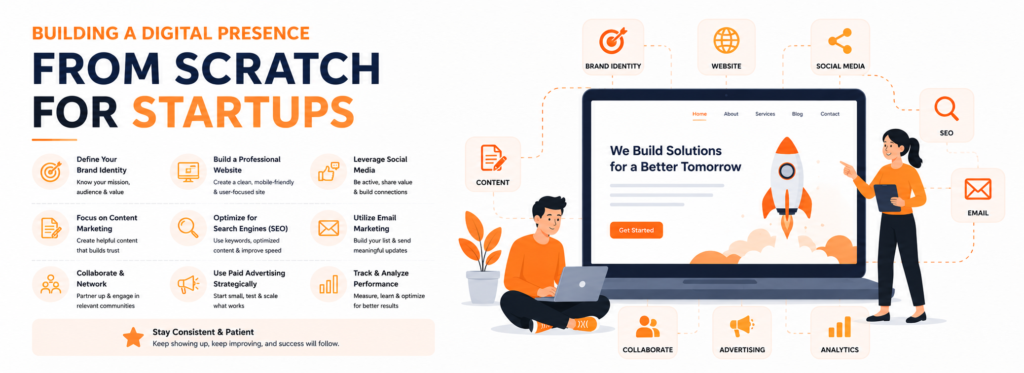
In today’s digital-driven world, having a strong online presence is no longer optional for startups—it is essential. Whether you are launching a tech product, a service-based business, or an e-commerce brand, your digital presence determines how people discover, perceive, and engage with your business.
For startups, the challenge is even greater. With limited budgets, resources, and brand recognition, building a digital presence from scratch can feel overwhelming. However, with the right strategy and consistent effort, startups can establish a strong foundation and grow effectively.
Start with a Clear Brand Identity
Before going online, startups must define their brand identity. This includes understanding what the business stands for, who it serves, and how it wants to be perceived.
Key elements to define:
- Brand mission and vision
- Target audience
- Unique value proposition
- Tone and personality
A clear brand identity ensures consistency across all digital platforms and helps the startup stand out in a crowded market.
Build a Professional Website
A website is the foundation of a digital presence. It acts as the central hub where customers can learn about the business, explore offerings, and take action.
A startup website should:
- Be clean and easy to navigate
- Clearly explain products or services
- Include strong calls-to-action
- Be optimized for mobile devices
Even a simple website can create a strong first impression if it is well-designed and user-friendly.
Leverage Social Media Platforms
Social media is one of the most powerful tools for startups to gain visibility. Platforms like Instagram, LinkedIn, and Twitter allow businesses to connect directly with their audience.
Startups should:
- Choose platforms where their audience is active
- Post consistently
- Share valuable and engaging content
- Interact with followers
Social media is not just about promotion—it is about building relationships and creating a community.
Focus on Content Marketing
Content marketing is a cost-effective way for startups to attract and engage their audience. By creating valuable content, startups can establish authority and build trust.
Types of content include:
- Blog posts
- Videos
- Infographics
- Social media content
The goal is to provide value rather than just promote products. Over time, this approach helps build credibility and attracts organic traffic.
Optimize for Search Engines (SEO)
Search engine optimization (SEO) helps startups become discoverable online. By optimizing content with relevant keywords and improving website performance, startups can rank higher in search results.
Basic SEO practices include:
- Using targeted keywords
- Writing informative blog content
- Optimizing website speed
- Creating meta descriptions
SEO takes time, but it provides long-term benefits by driving organic traffic.
Utilize Email Marketing
Email marketing is one of the most effective ways to nurture leads and maintain customer relationships. Startups can use email to share updates, promotions, and valuable content.
Building an email list early is important. Offering incentives such as free resources or discounts can encourage users to subscribe.
Consistent and meaningful communication helps keep the brand top of mind.
Collaborate and Network
Collaboration is a powerful way for startups to expand their reach. Partnering with influencers, other businesses, or industry experts can introduce the brand to new audiences.
Networking also helps build credibility and opens up opportunities for growth. Startups should actively engage in online communities and industry discussions.
Use Paid Advertising Strategically
While organic growth is important, paid advertising can help startups gain initial traction. Platforms like Google Ads and social media ads allow businesses to target specific audiences.
Startups should:
- Start with a small budget
- Test different campaigns
- Analyze performance
Strategic use of paid ads can accelerate growth and increase visibility.
Track and Analyze Performance
Building a digital presence is an ongoing process that requires continuous improvement. Startups should track key metrics such as:
- Website traffic
- Social media engagement
- Conversion rates
- Customer acquisition cost
Analyzing data helps identify what works and what needs improvement. This allows startups to refine their strategies and achieve better results.
Stay Consistent and Patient
One of the biggest challenges for startups is maintaining consistency. Building a digital presence does not happen overnight—it requires time, effort, and persistence.
Startups should focus on:
- Posting regularly
- Engaging with their audience
- Continuously improving their content
Patience is key. Consistent effort leads to gradual growth and long-term success.
Conclusion
Building a digital presence from scratch may seem challenging, but it is one of the most important steps for startup success. By focusing on brand identity, creating valuable content, leveraging social media, and optimizing for search engines, startups can establish a strong online foundation.
The key is to start small, stay consistent, and adapt over time. In the digital world, visibility leads to opportunity—and for startups, that opportunity can make all the difference.
