
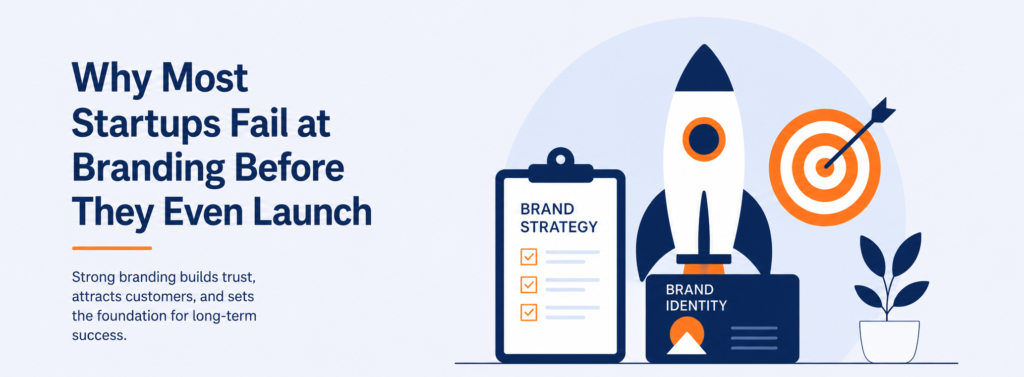
Launching a startup in 2026 is easier than ever, but building a recognizable brand is still one of the biggest challenges for new businesses. Many startups focus heavily on products, services, funding, and operations while ignoring branding. As a result, they struggle to attract customers, build trust, and stand out in a crowded market.
Branding is not just a logo or color palette. It is the complete identity of a business. From messaging and design to customer experience and social presence, branding shapes how customers perceive a company.
In this blog, we explore why startups fail at branding before launch and how businesses can create a strong foundation for long-term success.
1. Lack of Clear Brand Identity
One of the biggest branding mistakes startups make is launching without a clear identity. Businesses often try to appeal to everyone instead of defining a specific audience.
A strong brand identity includes:
- Brand mission
- Brand values
- Target audience
- Visual identity
- Tone of communication
- Unique positioning
Without clarity, customers struggle to understand what the business stands for.
2. Inconsistent Branding Across Platforms
Many startups use different styles, messaging, and visuals across websites, social media, and marketing campaigns. This inconsistency weakens brand recognition.
Consistent branding helps businesses:
- Build customer trust
- Improve recognition
- Create professionalism
- Increase brand recall
Customers are more likely to trust brands that look organized and visually consistent.
3. Ignoring Brand Storytelling
Modern consumers connect emotionally with brands. Businesses that fail to communicate their story often appear generic.
A compelling brand story explains:
- Why the business was created
- What problem it solves
- The vision behind the brand
- How it helps customers
Storytelling helps brands build emotional connections and customer loyalty.
4. Weak Online Presence
In the digital era, customers judge businesses within seconds. Poor website design, outdated visuals, or low-quality social media content can damage credibility.
Startups need:
- A professional website
- Strong social media branding
- SEO-focused content
- Mobile-friendly user experience
- Clear messaging
Digital branding directly impacts customer trust and conversions.
5. Following Trends Without Strategy
Many startups copy popular design trends without understanding their audience. While trends can attract attention temporarily, branding should focus on long-term identity.
Businesses that prioritize authenticity over trends build stronger customer relationships.
Conclusion
Startups that invest in branding early create stronger market positioning and long-term growth opportunities. In 2026, branding is no longer optional — it is essential for survival.
Businesses with clear identity, strategic design, consistent communication, and authentic storytelling are more likely to succeed in competitive markets.
Strong branding does not require a massive budget. It requires clarity, consistency, and customer understanding.
